Standardized Milk Thistle Extract Product Recommendations
Selecting the correct phytotherapeutic grade of Milk Thistle Extract (Silybum marianum) depends on dosage form architecture, solubility requirements, and regulatory targets. Below are our core enterprise grades produced under cGMP environments in Halol, Gujarat.
Standardized Silymarin 80% (UV-Vis)
The industry benchmark for solid oral dosage forms. Processed through controlled alcoholic extraction to yield a golden-yellow powder rich in total flavonolignans (Silymarin complex).
Mesh Size: 95% passing 80 mesh
Application: Hard Gelatin Capsules, Tablets, Herbal Teas
Silybin A+B High Potency Extract (USP / EP Grade)
Quantified via HPLC-DAD analysis to measure individual isomer fractions. Standardized specifically to provide elevated levels of Silybin A and Silybin B, the most active biological molecules in the Silymarin complex.
Solvent: Ethyl Acetate / Ethanol (Acetone-Free option available)
Application: Pharmaceutical Liver Therapeutics, Premium Nutraceuticals
Hydrophilic Water-Soluble Milk Thistle Powder
Engineered using specialized food-grade carrier spray-drying and micro-emulsification technology. Completely eliminates hydrophobic floating particles in water-based functional beverages and liquid elixirs.
Solubility: 100% Instant Dispersion in Water
Application: Ready-To-Drink (RTD) Beverages, Effervescent Tablets
Liposomal Milk Thistle Phytosome Complex
Phospholipid-encapsulated Silymarin complexes developed in our DSIR-recognized R&D center. Bypasses liver first-pass metabolism issues and improves cellular absorption up to 4.6 times compared to standard crude extracts.
Carrier: Non-GMO Sunflower Lecithin / Phosphatidylcholine
Application: Softgels, High-Efficacy Bio-Nutraceuticals
USDA / NPOP Organic Milk Thistle Powder & Extract
Sourced from certified organic contract farming initiatives. Free from synthetic chemical solvents, organochlorine pesticides, and artificial additives. Full agricultural supply chain traceability.
Assay: 50% - 80% Organic Silymarin
Application: Clean-Label Organic Supplements & Superfood Mixes
Micronized High-Density Silymarin Powder
Ultra-fine milled extract customized for ultra-high-speed encapsulation lines and direct-compression tableting requiring precise flowability and bulk density control.
Tapped Density: 0.50 – 0.70 g/ml
Application: High-Speed Capsule Filling & Direct Compression Tablets
Comprehensive B2B Technical Specification Matrix
The table below illustrates the standard analytical parameters verified for every commercial batch exported by Phyto Life Sciences P. Ltd.
| Analytical Parameter | Testing Methodology | Standard Acceptance Criteria | Phyto Life Sciences Quality Assurance |
|---|---|---|---|
| Appearance & Color | Visual Inspection | Light Yellow to Brownish-Yellow Powder | Strict color consistency index across batches |
| Assay (Total Silymarin) | UV-Vis Spectrophotometry | ≥ 80.0% Total Flavonolignans | Calibrated against USP/EP reference standards |
| Assay (Silybin A + Silybin B) | HPLC-DAD (High Performance Liquid Chromatography) | ≥ 30.0% to 45.0% Silybin (A+B) | Full chromatogram finger-printing supplied |
| Residual Solvents | GC-HS (Gas Chromatography - Headspace) | Ethyl Acetate < 50 ppm, Ethanol < 500 ppm, Acetone < 50 ppm | Complies with ICH Q3C (R6) & EP guidelines |
| Heavy Metal Profile | ICP-MS (Inductively Coupled Plasma Mass Spectrometry) | Lead < 0.5 ppm, Cadmium < 0.5 ppm, Mercury < 0.1 ppm, Arsenic < 1.5 ppm | Strict compliance with EU Regulation 1881/2006 & USP <232> |
| Pesticide Residue Screen | LC-MS/MS & GC-MS/MS (Multi-Residue Screen) | Complies with USP <561> & European Pharmacopoeia (EP 2.8.13) | Screened for 400+ organochlorines & organophosphates |
| Mycotoxins (Aflatoxins) | HPLC-FLD / Immunoaffinity | Aflatoxin B1 < 2 ppb; Total Aflatoxins (B1+B2+G1+G2) < 4 ppb | Guaranteed zero mold toxicity contamination |
| Pyrrolizidine Alkaloids (PAs) | LC-MS/MS | Total PAs < 1.0 ppm (Complies with EU 2020/2058) | Eliminates raw seed weed seed co-harvesting contamination |
| Microbial Limits | USP <2021> / <2022> Methodologies | Total Plate Count < 1,000 CFU/g; Yeast & Mold < 100 CFU/g; E. coli / Salmonella / S. aureus Negative | Cleanroom Class-D spray drying ensures low bioburden |
Phytochemical Architecture & Extraction Processing
Milk Thistle (Silybum marianum L. Gaertn.) seeds contain a complex mixture of flavonolignans collectively known as Silymarin. The primary active biological constituents include Silybin A, Silybin B, Isosilybin A, Isosilybin B, Silychristin, and Silydianin, along with taxifolin (a potent flavonoid precursor).
At Phyto Life Sciences, extraction chemistry is engineered to maximize active molecule yield while removing lipophilic plant fatty acids and toxic contaminants. Our extraction facility located in Halol, Gujarat utilizes a multi-stage counter-current extraction process:
Raw Milk Thistle seeds naturally contain 20–30% lipids/oils. Before target flavonolignan extraction, seeds undergo mechanical cold pressing and supercritical solvent defatting to remove non-polar lipid fractions that destabilize powder stability.
We utilize food-grade Ethyl Acetate or Aqueous Ethanol systems instead of toxic chlorinated solvents or excess acetone. This ensures residual solvent concentrations fall well below strict European Pharmacopoeia (EP) safety thresholds (<50 ppm).
Extracted liquid concentrates pass through multi-stage filtration and are dried inside pharmaceutical-grade Class-D HVAC controlled drying suites equipped with 7 industrial spray dryers and low-temperature vacuum ovens, preserving temperature-sensitive silybin isomers.
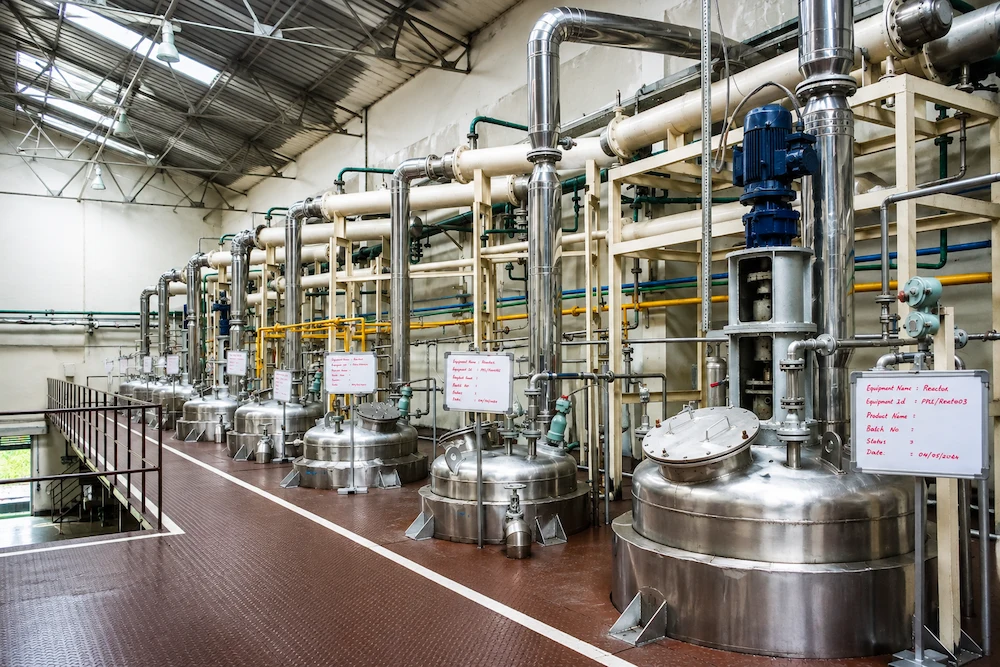
Every lot undergoes dual testing (UV vs. HPLC-DAD) in our 3,000 sq.ft. analytical laboratory to ensure absolute assay transparency.
Analytical Information Gain: Resolving the UV vs. HPLC Silymarin Assay Discrepancy
A common point of friction for global B2B procurement officers is the variance in analytical test results between UV-Vis Spectrophotometry and HPLC-DAD chromatography:
- UV-Vis Spectrophotometry (80% Assay): Measures total light absorbance at ~288 nm. It quantifies all polyphenolic structures, taxifolin, and related flavonoids together, typically displaying results between 80.0% and 85.0% total flavonolignans.
- HPLC-DAD Chromatography (50%–60% Assay): Chromatographically separates individual molecules (Silychristin, Silydianin, Silybin A, Silybin B, Isosilybin A, Isosilybin B). Because HPLC isolates non-active phenolic impurities, the numeric output for the exact same sample tests around 50.0% to 60.0% total active Silymarin.
Procurement Insight: A standard testing 80% on UV is chemically identical to a sample testing 50-55% on HPLC. Phyto Life Sciences provides dual CoA testing parameters on both spectrophotometric and chromatographic methodologies so your QA team experiences zero regulatory mismatches during customs clearance or raw material release.
Global Milk Thistle Procurement & Market Trends (2025–2030)
As AI-driven search, personalized nutrition, and stringent health authority regulations reshape global supply chains, purchasing departments must navigate changing consumer demands and compliance landscapes.
1. Shift toward HPLC-Quantified Silybin A+B
Global brands are abandoning generic 80% UV crude specs in favor of standardized Silybin A+B ratios (≥30% by HPLC). Clinical trials demonstrate that Silybin is the core bioactive responsible for hepatoprotection, lipid peroxidation inhibition, and mitochondrial membrane stabilization.
2. Surge in Bioavailability Enhancements
Unformulated Silymarin suffers from low oral bioavailability (<5% systemic absorption) due to poor water solubility and rapid hepatic degradation. Demand for Phytosome liposomal complexes, phospholipid matrices, and self-emulsifying drug delivery systems (SEDDS) is projected to grow at 11.4% CAGR through 2030.
3. Zero-Solvent & Acetone-Free Protocols
Regulatory authorities in the European Union (EFSA) and the US FDA are enforcing lower thresholds for Class 2 & 3 solvent residues. Sourcing trends favor suppliers utilizing pure Ethanol and Ethyl Acetate green extraction techniques over traditional Acetone-heavy processing.
4. Strict Limits on Pyrrolizidine Alkaloids (PAs)
Under EU Regulation 2020/2058, strict legal maximum limits for Pyrrolizidine Alkaloids apply to herbal extracts. Wild-harvested seeds co-mingled with weed species (e.g., Senecio) can contaminate raw batches. Phyto Life Sciences employs seed cleaning machinery and LC-MS/MS testing to guarantee PA-free supply.
5. Clean-Label Beverage & Ready-To-Drink Integration
The functional beverage category (hangover prevention elixirs, liver detox shots, wellness teas) requires clear water solubility without sediment drop-out. Formulators are transitioning to hydrophilic micro-emulsified Milk Thistle powders that maintain clear solution clarity.
6. Contract Agriculture & Supply Chain Resiliency
Unpredictable climate patterns across traditional Eastern European growing regions have created price volatility. India's expanding agricultural infrastructure and contract farming model offer stable, year-round raw material availability and locked-in bulk pricing structures.
Why Global Procurement Leaders Choose Phyto Life Sciences
Founded with a vision to merge traditional botanical wisdom with modern analytical science, Phyto Life Sciences P. Ltd. operates as a premier B2B bulk manufacturer catering to leading pharmaceutical, nutraceutical, cosmeceutical, and food brands across 50+ countries.
5,000 kg+ Daily Production Infrastructure
Equipped with 40+ stainless steel extractors and 7 industrial spray drying towers operating in Halol, Gujarat — capable of handling high-volume commercial contracts with consistent turn-around times.
Forest-Adjacent Contamination-Free Location
Our manufacturing footprint near the pristine Pavagadh forest reserve provides clean ambient air quality, pure natural processing water, and ideal conditions for high-purity botanical extraction.
DSIR-Recognized R&D Center (3,000 Sq. Ft.)
In-house research and development center recognized by the Department of Scientific and Industrial Research (DSIR), Government of India, driving patented extraction protocols and custom liposomal delivery systems.
Sustainable Solar-Powered Eco Manufacturing
Integrated solar panels power our extraction equipment and water recovery systems, delivering lower carbon footprint raw materials for eco-conscious global consumer brands.
Frequently Asked Questions by Global Buyers
Detailed technical answers addressing common procurement, compliance, and analytical queries regarding bulk Milk Thistle Extract sourcing.
Q1: Why does Milk Thistle Extract show 80% on UV-Vis but 50-60% on HPLC testing?
UV-Vis Spectrophotometry measures overall absorbance at ~288 nm, capturing total flavonolignans along with taxifolin precursors and general plant polyphenols, which yields a ~80% reading. High-Performance Liquid Chromatography (HPLC-DAD) chromatographically separates individual active isomers (Silybin A, Silybin B, Silychristin, Silydianin, Isosilybin A & B). Because HPLC excludes non-active baseline polyphenols, the same chemical extract displays a numerical HPLC value of 50-60%. Phyto Life Sciences reports dual test results on every CoA to prevent quality release ambiguity.
Q2: What extraction solvents do you use, and what are your residual solvent limits?
We offer two primary solvent extraction pathways: (1) Green Ethyl Acetate / Ethanol process and (2) Traditional Acetone extraction. For pharmaceutical and European Union regulatory compliance, our Ethyl Acetate/Ethanol grades guarantee residual solvent concentrations well under 50 ppm, fully compliant with ICH Q3C (R6) residual solvent guidelines and European Pharmacopoeia standards.
Q3: How do you control Heavy Metals, Pesticides, and Pyrrolizidine Alkaloids (PAs)?
Every batch of Silybum marianum undergoes triple-quad ICP-MS analysis for heavy metals (Lead < 0.5 ppm, Cadmium < 0.5 ppm, Mercury < 0.1 ppm, Arsenic < 1.5 ppm) adhering to USP <232> and EU 1881/2006. Pesticide residue screens (LC-MS/MS & GC-MS/MS) cover 400+ compounds under USP <561>. To prevent Pyrrolizidine Alkaloid (PA) contamination from invasive farm weeds, raw seeds undergo optical seed cleaning and LC-MS/MS PA screening to ensure compliance with EU 2020/2058.
Q4: Can you provide water-soluble Milk Thistle Extract for functional drink formulations?
Yes. Native Silymarin is naturally lipophilic and insoluble in water. We produce a specialized 10% and 20% Water-Soluble Milk Thistle Powder via micro-emulsification and food-grade carrier spray-drying. It dissolves clearly in water without precipitation, floating rings, or sediment drop-out — making it ideal for ready-to-drink (RTD) shots, liquid drops, and effervescent tablets.
Q5: What is the Minimum Order Quantity (MOQ), packaging detail, and shelf life?
Our standard commercial MOQ starts at 25 kg packed in double food-grade polyethylene inner bags sealed inside tamper-evident HDPE fiber drums. Samples (100g – 500g) are available for R&D testing and qualification upon request. When stored in original sealed containers in a cool, dry place away from direct sunlight, our Milk Thistle Extract carries a certified shelf life of 36 months (3 years).
Q6: Do you provide US FDA Drug Master File (DMF) or technical regulatory dossiers?
Phyto Life Sciences supports pharmaceutical and nutraceutical client submissions with comprehensive technical documentation packages, including Certificate of Analysis (CoA), Manufacturing Flow Charts, Safety Data Sheets (SDS/MSDS), BSE/TSE-Free Certificates, Non-GMO Declarations, Allergen Statements, Solvent Declarations, and Regulatory Dossiers aligned with US FDA and EU EFSA registration requirements.
Q7: Is your Milk Thistle Extract non-irradiated and Ethylene Oxide (EtO) free?
Yes. All extract batches manufactured by Phyto Life Sciences are 100% Non-Irradiated and Ethylene Oxide (EtO) free. Microbial reduction is achieved using controlled cleanroom hygiene, closed-loop sanitization, and Class-D cleanroom thermal spray drying protocols.