Choosing a China Best Functional Mushroom Blend Powder Supplier takes more than comparing prices or polished product photos. Buyers should examine species identification, ingredient ratios, processing controls, and batch-level test records. Functional Mushroom Blend Powder can vary widely in texture, aroma, solubility, and composition. A fine tan powder may look consistent, yet appearance alone cannot confirm its contents. Ask whether the blend uses fruiting bodies, mycelium, or both, and request clear explanations of extraction methods. Check that specifications match the intended use and that test reports identify the tested batch. Small details matter. Clear documentation is reassuring, though it does not replace independent verification.
Mycologist Paul Stamets has said, “Mushrooms are miniature pharmaceutical factories, each one a universe of medicinal potential.” This memorable observation points to mushroom diversity, not proof that any powder produces a particular health effect. Responsible suppliers should describe ingredients accurately and avoid promising outcomes they cannot substantiate. For importers, practical checks include sample consistency, packaging protection, traceability, and responsive communication when questions arise. A supplier may offer attractive specifications, but buyers should still confirm them against actual samples and records. That work can feel slow. It is also where confidence is built. This guide introduces the criteria that help evaluate a Chinese supplier, compare blend quality, and make a more informed sourcing decision. It also recognizes an imperfect reality: a tidy product sheet cannot answer every question, so careful follow-up remains essential.
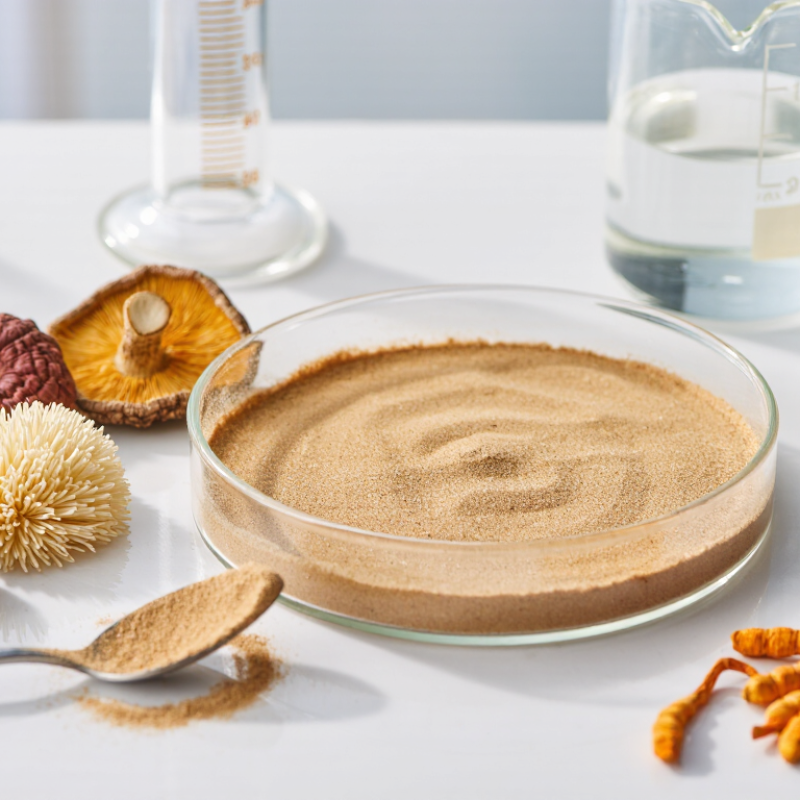
China Best Functional Mushroom Blend Powder Supplier
A functional mushroom blend powder combines two or more mushroom ingredients into a measured, dry formula. Common choices include reishi, lion’s mane, chaga, and cordyceps. The powder may contain whole-fruiting-body material, mycelium, or extracts; these are not interchangeable. Extraction methods and species can affect the final composition, so check the ingredient list and product specifications rather than relying on the word “blend.”
Market figures offer context, not proof of health benefits. Grand View Research estimated the global functional mushroom market at about US$31.7 billion in 2023, with projected growth through 2030. These figures depend on how analysts define the category. A market forecast cannot tell you whether a particular powder is effective. For informed sourcing, look for species identification, the part used, extraction details, batch testing, and clear statements about beta-glucans or other measured constituents. One detail is easy to miss: a high extract ratio alone does not establish quality.
A functional mushroom blend may combine lion’s mane, reishi, cordyceps, chaga, shiitake, or maitake. Each species brings a different flavor and powder profile. Lion’s mane is mild and earthy; reishi is notably bitter. Cordyceps may add a roasted, slightly sweet note. Formulas often use fruiting-body powders, hot-water extracts, or both. The source material should be stated clearly.
Other ingredients shape taste and texture. Cacao, cinnamon, and ginger can soften earthy notes, while coconut milk powder or inulin can add body. They are not mushroom actives. USDA FoodData Central lists raw white mushrooms at 3.09 grams of protein and 1.0 gram of fiber per 100 grams. That reference describes a common food mushroom, not the composition of concentrated functional extracts. Details matter.
For supplier comparisons, request species identification, fruiting-body or mycelium details, extraction method, and batch-specific test results. Beta-glucan and alpha-glucan results help buyers interpret the extract; neither number alone tells the whole story. Ask about moisture, heavy-metal testing, and microbial testing, too. This is less glamorous. But it matters. Blends are not standardized across suppliers, and a larger ingredient list does not guarantee a better powder. Even a carefully documented formula can taste too bitter or settle in the cup. A sample test before a large order deserves attention.
A reliable mushroom blend begins with authenticated fruiting bodies or mycelium, documented by species, growing substrate, and harvest lot. After cleaning and drying, the material is milled, sieved, and blended to a defined formula. Extraction may be used, but the supplier should state whether the powder is whole-mushroom or extract; the two are not interchangeable. Keep the batch traceable. FDA’s food-safety guidance identifies water activity of 0.85 as an important boundary for controlling pathogen growth in foods. Dry-powder makers often set a much lower internal target, such as below 0.60, while recognizing that low water activity does not remove contamination already present.
Quality testing should confirm identity and composition, not just appearance. A competent lab can assess species markers, beta-glucans, alpha-glucans or starch, moisture, water activity, heavy metals, pesticides, and microbial counts. FDA’s 21 CFR Part 111 requires dietary-supplement manufacturers to establish specifications and verify that products meet them; ISO/IEC 17025 accreditation helps demonstrate laboratory competence. Ask for lot-specific certificates of analysis, test methods, and detection limits. No single test tells the whole story. A high beta-glucan result can still mislead if starch is also high, so results need context. Sampling matters, too: a clean test from one scoop cannot prove every part of a poorly mixed batch is uniform.
The bars show the typical order of production stages, not processing time or product performance. Quality checks commonly include ingredient identity, moisture, microbial contaminants, and heavy metals; exact procedures depend on the product and applicable requirements.
A reliable Chinese mushroom powder supplier makes evidence easy to check, not just easy to promise. Ask for the Latin species name, the part used, the growing region, and whether the powder contains fruiting body, mycelium, or both. These details matter. Cultivation and drying records should connect each production lot to its source and processing conditions. Traceability should work in reverse, too: can a finished batch be linked to its raw material? That simple question can reveal gaps.
Testing should be batch-specific and performed by a qualified laboratory. Review results for identity, heavy metals, microbial counts, moisture, and relevant pesticide residues. Check the report date, sample description, and testing methods; a generic certificate may not describe the powder being purchased. Ask how the supplier handles results outside its limits and whether retained samples are available. Paperwork helps, but it is not the whole picture.
A dependable supplier can explain blending ratios, particle size, packaging protection, and storage conditions in plain language. Facility audits and documented quality procedures add useful evidence, while clear change-control records help explain shifts in color or flavor between lots. Still, no document guarantees perfect consistency. A faint earthy smell may vary naturally, yet unexplained changes deserve investigation. Suppliers should answer questions directly, share records securely, and acknowledge what their testing cannot establish.
Comparing functional mushroom blend powder suppliers starts with a precise product brief. List the intended species, serving format, target market, and preferred powder characteristics. Ask whether each ingredient comes from fruiting bodies, mycelium, or both. Request the extraction method and confirm how active compounds are measured. Terms such as “high potency” mean little without defined specifications.
Review a recent certificate of analysis for the actual batch, not only a sample document. Check identity, beta-glucan results, moisture, and relevant microbial and contaminant tests. Confirm that test methods and laboratory details are available. Small details matter. A polished certificate can still leave practical questions unanswered. Compare traceability records, ingredient origins, and how suppliers manage changes between production lots.
Before placing a large order, request a representative sample and test its aroma, color, solubility, and taste in your intended recipe. Discuss minimum order quantities, production lead times, packaging barriers, and shelf-life evidence early. Ask how delays or out-of-specification batches are handled. Keep written specifications and approval samples for future comparisons. No scorecard is perfect. A supplier may offer strong documentation but miss your delivery window, so weigh quality controls alongside communication and realistic capacity. Start with a modest trial order when possible, then review consistency before planning repeat purchases.
| Comparison Dimension | What Buyers Should Specify | Evidence to Request | How to Compare Offers | Sourcing Action |
|---|---|---|---|---|
| Species and identity | List each mushroom by common name and Latin binomial, such as lion’s mane (Hericium erinaceus) or reishi (Ganoderma lingzhi). Specify whether the material is fruiting body, mycelium, or another part. | Product specification, raw-material traceability records, and identity-testing details for the finished ingredient or relevant raw materials. | Check that the species, material part, and ingredient description match across the specification, quotation, and proposed label. | Agree on the exact species and material part before requesting samples or quotations. |
| Blend composition | State the amount or percentage of every mushroom in the blend, plus any carriers, flavorings, or other ingredients. | Formula or ingredient breakdown, finished-product specification, and a sample label declaration. | Compare like-for-like formulas; a blend with a different ingredient ratio or carrier content is not a direct price comparison. | Set a target formula and permitted substitution rules in writing. |
| Powder and extraction format | Clarify whether each ingredient is whole mushroom powder, extract powder, or a blend of formats. If extracted, request the extraction process and the basis for any stated ratio. | Process description, specification, and supporting records for any extraction-ratio or extract-content claim. | Do not treat an extraction ratio alone as proof of potency or quality; compare the full specification and test data. | Define acceptable formats and claim wording before finalizing packaging artwork. |
| Beta-glucan and related testing | Specify whether beta-glucan content is required and how it should be reported. Ask whether alpha-glucan or starch is also measured. | Recent certificate of analysis (COA), test method, units, sample identification, and testing laboratory details. | Compare results only when the methods, units, and sample basis are clear and comparable. | Set a product-specific acceptance limit with a qualified technical or regulatory adviser; do not rely on a marketing statement alone. |
| Microbiological and contaminant controls | Identify the microbiological limits and contaminant tests relevant to the intended product and destination market. | Lot-specific COA and the supplier’s sampling, testing, and out-of-specification procedures. | Check that results are reported against agreed limits and that the report identifies the tested lot. | Confirm applicable market requirements and agree on testing responsibilities before placing an order. |
| Food-safety system | Ask which food-safety and quality-management systems apply at the manufacturing site. | Current certificates, issuing-body details, site scope, expiry dates, and audit or corrective-action information where available. | Verify that the certificate covers the relevant site and activity; certification is not a substitute for product-specific testing. | Complete document verification and a risk-based supplier assessment before approval. |
| Sample and batch consistency | Request a representative sample and define the specification that production lots must meet. | Sample COA, production-lot COAs, retained-sample policy, and change-control procedure. | Compare the sample against the agreed specification, then confirm that routine lots will be tested to the same requirements. | Approve a reference sample and document the lot-release criteria in the purchase agreement. |
| Packaging and shelf life | Set pack size, packaging material, storage conditions, shelf-life period, and required date or lot coding. | Packaging specification, shelf-life support, storage guidance, and a sample of the proposed label or package. | Check that the packaging and storage guidance suit the product, shipping conditions, and planned sales market. | Approve packaging and label details before production; confirm remaining shelf life at shipment. |
| Commercial terms and logistics | Request the minimum order quantity, unit price by order volume, production lead time, payment terms, and proposed shipping terms. | Itemized quotation, production schedule, shipping documents available for the route, and written order terms. | Compare total landed cost and delivery assumptions, not unit price alone. Confirm which costs and responsibilities are included. | Obtain written, order-specific terms; lead times, minimums, and freight costs are supplier- and route-dependent. |
| Regulatory and label support | Identify the destination market and intended product category. Specify required ingredient, allergen, and label information. | Ingredient documentation, allergen statement, applicable product documents, and supporting evidence for proposed claims. | Assess each document against the destination market’s current requirements; supplier materials do not replace local regulatory review. | Have the final formula and label reviewed for the target market before printing or import. |
| Buyer comparison score | Score each supplier from 1 to 5 for specification fit, evidence quality, quality controls, commercial terms, and communication. | Completed comparison sheet with links or references to the documents reviewed. | Use the same criteria and weighting for every candidate; treat the score as an internal decision aid, not a certification. | Shortlist suppliers that meet mandatory quality and regulatory requirements before comparing discretionary factors. |
Planning note: Supplier-specific figures such as price, minimum order quantity, and lead time should be confirmed in a current written quotation. Establish product specifications and destination-market requirements before comparing offers.
Common choices include lion’s mane, reishi, cordyceps, chaga, shiitake, and maitake. Each has a different flavor and powder profile. Reishi can taste quite bitter.
Formulas may contain whole fruiting-body powder, hot-water extracts, or both. Ask whether mycelium is included and what substrate it grew on. The source should be clear.
Cacao, cinnamon, and ginger can soften earthy notes. Coconut milk powder or inulin may add body. They are supporting ingredients, not mushroom actives. Taste still varies.
Documented material is cleaned, dried, milled, sieved, and blended to a set formula. Some blends are extracted before drying. These forms are not interchangeable.
Request batch-specific results for identity, beta-glucans, alpha-glucans or starch, moisture, water activity, heavy metals, pesticides, and microbial counts. A single number is not enough.
Beta-glucans help describe the extract, while alpha-glucans can indicate starch content. Read both with the test method and sample details. High beta-glucans alone may not tell the full story.
Ask for species names, growing region, material type, harvest lot, and processing records. A finished batch should link back to its raw materials. Gaps deserve questions.
Review the certificate, detection limits, packaging, particle size, and storage guidance. Request a sample and check taste, settling, and consistency. Taste it first. Good paperwork cannot guarantee a pleasant cup.
Functional Mushroom Blend Powder combines selected mushroom species into a convenient ingredient for food, beverage, and supplement formulations. A blend may include varieties such as lion’s mane, reishi, cordyceps, chaga, or turkey tail, with the exact composition and processing choices shaped by the intended application. Buyers should review ingredient specifications, mushroom parts used, extraction or drying methods, and the blend’s flavor, solubility, and format.
Choosing a reliable Chinese supplier involves assessing raw-material traceability, production controls, and testing for identity, composition, moisture, and potential contaminants. Clear documentation, consistent batch quality, and transparent communication help buyers compare suppliers effectively. Before sourcing, define product requirements, target volume, packaging, and delivery expectations, then request samples and supporting quality records to determine whether a supplier can meet the project’s needs over time.