Sourcing Yucca Schidigera Extract Powder in 2026 requires more than comparing prices on supplier websites. Buyers must connect botanical identity, processing quality, documentation, and supply reliability. A bright, free-flowing powder may look acceptable, yet appearance cannot confirm potency or authenticity. Reliable sourcing begins with clear specifications, including yucca species, extract ratio, saponin content, moisture, mesh size, and intended application.
Experienced procurement teams usually request a current Certificate of Analysis for every production lot. They also review heavy metals, microbial limits, pesticides, residual solvents, and allergen statements. Independent laboratory testing can verify critical results, especially when purchasing from unfamiliar exporters. Ask for batch numbers, production dates, shelf-life data, and storage conditions. A sealed sample should arrive with matching documents, not separate promises. Small details matter.
Supplier evaluation should also examine traceability and environmental practices. Confirm where the yucca is harvested, how roots are processed, and whether collection supports responsible resource management. Regional rules may differ for food, feed, cosmetics, and supplements, so compliance claims require careful checking. No single certificate proves complete reliability. That assumption deserves scrutiny. Price remains important, but unusually low quotations may reflect weaker testing, inconsistent concentration, or hidden freight costs. This guide explains how to compare suppliers, assess technical evidence, negotiate practical terms, and reduce avoidable sourcing risks. It also highlights questions buyers often overlook, such as re-test procedures, packaging performance, and response times during quality disputes. Procurement rarely goes perfectly. A documented process makes corrections easier.
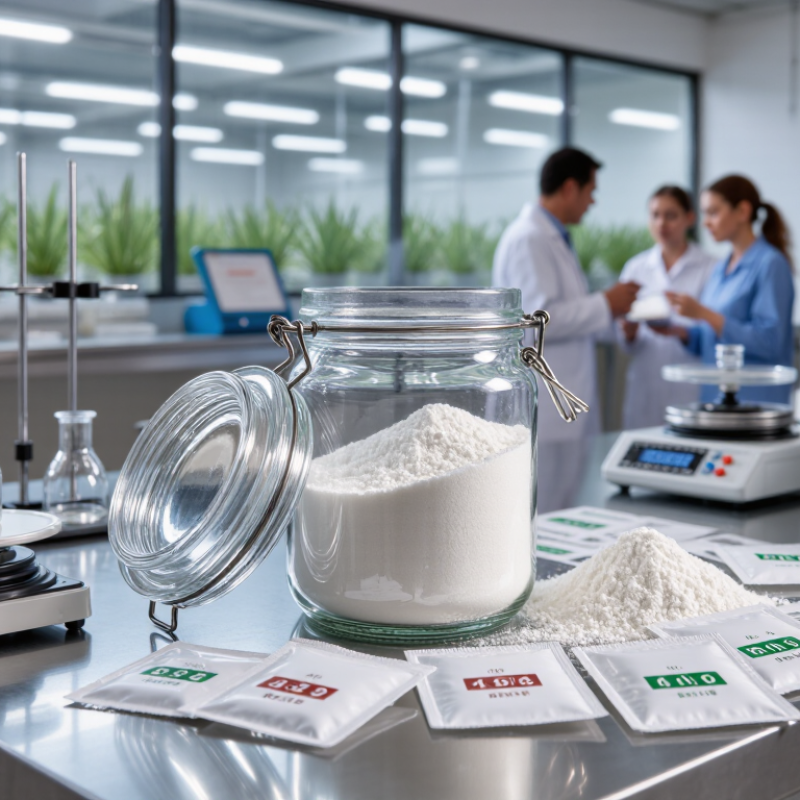
Yucca schidigera extract powder comes from the desert yucca plant, mainly its trunk and stems. It contains steroidal saponins, which are often linked to foam formation and odor management. However, its composition can vary with plant age, harvest conditions, and extraction methods. It is sourced for animal nutrition, agricultural formulations, and selected industrial applications. Buyers usually seek consistent saponin levels, stable powder quality, and reliable supply.
In 2026, sourcing should begin with a clear technical specification. Request the botanical name, plant part, extraction solvent, saponin assay method, moisture limit, and mesh size. A certificate of analysis should match the actual batch, not only a standard template. Check microbial limits, heavy metals, pesticide residues, and allergen statements where relevant. Ask for traceability from harvest area to finished powder. A small sample test may reveal color, odor, solubility, and sediment differences.
Tips: Compare at least three qualified suppliers. Review recent batch documents. Test before signing a large contract. Confirm packaging protects the powder from humidity. Also, avoid trusting unusually high assay claims without independent verification. I have seen specifications look precise but remain difficult to reproduce in production. That weakness matters. A supplier should explain variation honestly, provide corrective actions, and support compliant use in the destination market. Safety data and local regulatory checks still belong in the purchasing file.
How to Source Yucca Schidigera Extract Powder in 2026?
A suitable Yucca schidigera extract powder starts with measurable specifications, not a glossy product sheet. The 2024 Alltech Agri-Food Outlook reported global feed production at approximately 1.126 billion tonnes in 2023. That scale increases pressure on suppliers to deliver consistent batches. Ask for the botanical identity, plant part, extraction solvent, carrier percentage, and country of processing. The declaration should clearly state whether the powder is standardized by total saponins or a specific saponin fraction.
Saponin content matters, but it is not the only quality marker. Request a current certificate of analysis showing moisture, ash, bulk density, particle size, and solubility. Moisture below 8% is often practical for storage, although the final limit should match the formula. Test methods should be named, not vaguely described. AOAC or validated HPLC methods provide stronger evidence than an unchecked internal number. Look for microbiological testing aligned with ISO 4833-1, plus yeast, mold, Salmonella, and coliform results. Heavy metals and pesticide residues also need documented limits.
Packaging details reveal operational experience. A 20–25 kilogram moisture-barrier bag, lot coding, retest date, and sealed inner liner are useful safeguards. Confirm whether the powder cakes after transport. It can. I would also compare three consecutive batch reports, not one attractive sample. A low price may reflect weaker standardization, excess carrier, or incomplete testing. That assumption can fail, so independent verification remains worthwhile before approval.
| Specification Dimension | Recommended Procurement Requirement | Typical Acceptance Range or Target | Why It Matters / Verification |
|---|---|---|---|
| Botanical identity | Yucca schidigera Roezl ex Ortgies | Scientific name confirmed; no substitution with other Yucca species | Verify by supplier traceability records, authenticated raw-material documentation, and an identity test such as botanical microscopy or chromatographic fingerprinting. |
| Raw-material part | Stem or trunk material specified in the product dossier | Consistent plant part for every production lot | Plant part influences saponin concentration, color, ash, and contaminant risk. The purchase specification should not leave the plant part undefined. |
| Extraction profile | Aqueous extraction or another declared food/feed-compatible process | Process, concentration step, drying method, and permitted processing aids documented | Extraction conditions affect marker content and residual-solvent risk. Request the process flow and residual-solvent statement for each grade. |
| Saponins | Standardized total yucca saponins, expressed using the supplier’s validated method | Common commercial target: approximately 30–40% total saponins; the exact assay basis must be stated | Saponins are the principal functional marker for many yucca extract applications. Compare only results generated by comparable reference standards and methods. |
| Polyphenols | Optional secondary marker for antioxidant-oriented formulations | Value reported on the certificate of analysis when claimed; method and reference standard disclosed | Polyphenol values can vary substantially with raw material and extraction conditions, so they should not be used without a defined analytical method. |
| Appearance and odor | Free-flowing powder with characteristic botanical odor | Cream, tan, or light-brown powder; free from visible foreign matter, mold, and abnormal odor | A defined organoleptic profile helps identify oxidation, moisture uptake, contamination, or lot-to-lot process changes. |
| Moisture or loss on drying | Low-moisture powder suitable for storage and blending | Usually not more than 8.0%, unless the agreed product specification states otherwise | Excess moisture can reduce flowability and increase the risk of caking and microbial growth. Test method and drying conditions should be recorded. |
| Particle size | Defined mesh or sieve distribution matched to the final application | Common target: at least 95% passing an agreed sieve, such as 80 mesh; confirm before ordering | Particle size affects dispersion, dust generation, blending uniformity, and filling performance. |
| Bulk density and flowability | Bulk density reported for formulation and packaging calculations | Typical range may be about 0.35–0.65 g/mL, depending on drying and milling conditions | Density is process-dependent and should be treated as a control parameter rather than a universal identity limit. |
| pH of aqueous dispersion | pH tested at a defined concentration, such as 1% or 5% w/v | Often mildly acidic to near neutral, approximately pH 4.5–7.0; application-specific limits should be set | pH can influence formulation compatibility and should always be linked to the test concentration and water quality. |
| Microbiological quality | Limits appropriate to the intended food, feed, cosmetic, or supplement application | Total aerobic count, yeast and mold, Enterobacteriaceae, and absence criteria set according to the applicable regulation | Requirements differ by market and product category. Request recent lot-specific results from an accredited or qualified laboratory. |
| Heavy metals | Lead, arsenic, cadmium, and mercury individually tested | Limits based on the destination market and intended use; results preferably reported in mg/kg | Botanical materials may accumulate environmental contaminants. Do not rely only on a generic “passes heavy metals” statement. |
| Pesticide residues | Screening against the pesticide list required by the destination market | Complies with applicable maximum residue limits or demonstrates no quantifiable residue above the reporting limits | A complete multi-residue screen provides stronger assurance than testing only a small number of compounds. |
| Residual solvents | Not detected or controlled within applicable limits | Declaration required for water extraction; analytical results required when organic solvents are used | The solvent system must be consistent with the intended regulatory category and product use. |
| Adulteration and authenticity | No undeclared carriers, fillers, artificial colors, or substituted botanical material | Identity and composition match the agreed specification; carrier percentage declared if present | Use chromatographic fingerprinting, microscopy, and targeted screening where economically justified. |
| Stability and shelf life | Shelf life supported by real-time or accelerated stability data | Common commercial shelf life: 24–36 months when sealed and stored correctly; verify lot-specific date | Saponin assay, moisture, color, odor, and microbiological quality should remain within specification throughout the stated shelf life. |
| Packaging and storage | Sealed, food-contact-compatible inner liner with moisture and light protection | Store in a cool, dry place, protected from heat, humidity, direct light, and strong odors | Packaging integrity and storage conditions are essential because botanical powders can absorb moisture and lose flowability after opening. |
Sourcing Yucca Schidigera Extract Powder in 2026 requires more than comparing prices. A qualified supplier should provide the exact botanical name, plant part, extraction method, and country of origin. Ask for a lot-specific certificate of analysis, not a generic document. It should show saponin content, moisture, microbial limits, heavy metals, pesticides, and residual solvents. The test dates and laboratory details also matter.
Request a recent sample before approving a purchase. Check its color, odor, solubility, and powder flow under normal handling conditions. Independent laboratory testing can verify the supplier’s reported results. In practice, batch consistency often matters more than a single attractive specification. Review at least three production lots when possible. A supplier with traceable harvest records and controlled storage deserves closer attention.
Compare suppliers using the same checklist. Consider technical documentation, minimum order quantity, lead time, packaging, shelf-life evidence, and response speed. Ask how deviations are investigated and how rejected batches are handled. Facility audits, quality agreements, and change-notification procedures provide stronger evidence of reliability. A polished certificate is not enough. I would treat unclear answers as risk, even when the powder looks acceptable. Requirements may also differ by destination market, so confirm current food, feed, or cosmetic rules with a qualified regulatory professional.
When sourcing Yucca schidigera extract powder in 2026, buyers should demand records before discussing price. The 2024 Global Feed Survey estimated 1.126 billion tonnes of feed production in 2023. That scale makes traceability essential. Request a batch-specific certificate of analysis, not a generic template. It should identify plant part, origin, extraction solvent, saponin assay, testing method, and measurement uncertainty. Confirm botanical identity through microscopy, chromatography, or DNA testing when appropriate. A clean-looking powder proves little.
Safety files should include Salmonella, E. coli, total aerobic count, yeast, mold, heavy metals, aflatoxins, pesticide residues, and residual solvents. Test limits must match the destination market and intended feed use. The 2024 botanical-fraud database review highlights substitution and incorrect species identification as recurring risks. Ask for raw laboratory reports. Transcribed summaries can hide problems. Compliance records should cover HACCP or feed-GMP certification, current SDS, allergen and GMO statements, change-control history, recall procedures, and supply-chain traceability. EFSA feed-additive assessments also stress identity, exposure, and safety evidence. That matters.
One weakness remains. Certificates can be authentic yet outdated. Check the sampling date, laboratory accreditation, seal number, and storage conditions. Compare three recent batches. If values shift sharply, pause procurement and investigate. A supplier unwilling to share corrective-action records deserves careful reconsideration.
Sourcing Yucca schidigera extract powder in 2026 requires more than comparing quoted prices.
The 2024 Grand View Research botanical extracts report estimates the global market will expand at over 7% annually through 2030. That growth may tighten raw-material availability. Request a 100–250 gram sample from each supplier, then check color, odor, moisture, solubility, and saponin content. Ask for batch-specific test results, not generic certificates. A plain sample can reveal poor drying or inconsistent grinding.
Pricing should separate extract concentration, saponin level, packaging, freight, and testing fees. The 2024 MarketsandMarkets animal feed additives report values this broader market above USD 40 billion, with steady growth expected through 2029. That trend supports demand, but it does not justify accepting vague minimum-order quantities. Request three price tiers, such as 25, 100, and 500 kilograms. Confirm whether the quoted price remains valid for 30, 60, or 90 days. Small details matter.
For repeat orders, define a written specification before signing a supply agreement. Include acceptable moisture, assay range, microbiological limits, lead time, and deviation procedures. Maintain at least two qualified supply sources where practical. A six-month forecast helps, but forecasts are imperfect. I would begin with a pilot order, review two production batches, then negotiate quarterly delivery. Keep retained samples from every shipment. Supply continuity should be measured, not assumed.
It is a powder made from parts of a desert yucca plant. It contains steroidal saponins. These compounds may support foam formation and odor management. Composition can vary.
Buyers use it for animal nutrition, agricultural formulations, and selected industrial applications. They usually want stable saponin levels, reliable quality, and consistent supply.
Request the botanical name, plant part, extraction solvent, assay method, moisture limit, and mesh size. Include microbial limits, heavy metals, pesticides, and residual solvents when relevant.
Ask for a batch-specific certificate of analysis. Check test dates, laboratory details, and traceability records. A generic certificate is not enough. Verify important results independently.
Inspect color, odor, solubility, moisture, powder flow, and sediment. A sample may reveal poor drying or uneven grinding. Small tests help expose hidden variation.
Use the same checklist for every supplier. Compare documentation, minimum order quantity, lead time, packaging, shelf life, and response speed. Consider at least three qualified suppliers.
Separate extract concentration, saponin level, packaging, freight, and testing fees. Request price tiers for different quantities. Confirm how long each quotation remains valid.
Define assay range, moisture limits, microbiological standards, lead time, and deviation procedures. Keep retained samples from each shipment. A second supply source is useful, though not always practical.
Use packaging that limits humidity exposure. Store the powder in a dry, controlled area. Check seals, labels, and batch numbers when shipments arrive. Simple controls matter.
Plant age, harvest conditions, and extraction methods can change the composition. Forecasts can be wrong. High assay claims may look impressive but remain difficult to reproduce. That deserves scrutiny.
Sourcing Yucca Schidigera Extract Powder in 2026 requires a clear understanding of its intended use, functional benefits, and technical requirements. Buyers should define the desired saponin content, powder form, color, solubility, moisture level, particle size, processing method, and packaging before contacting suppliers. These specifications help ensure that the material performs consistently in applications such as animal nutrition, agricultural formulations, or other permitted commercial uses.
A reliable sourcing process should include comparing supplier experience, production capacity, quality systems, testing methods, and communication efficiency. Buyers should review product specifications, certificates of analysis, contaminant and microbiological testing, traceability records, safety documentation, and applicable compliance materials. Before placing a large order, requesting samples and conducting independent evaluation can reduce quality risks. Price comparisons should consider concentration, testing, packaging, shipping, minimum order quantities, and payment terms rather than unit cost alone. Clear purchase agreements, batch consistency requirements, lead-time planning, and regular quality reviews are essential for building a stable, transparent, and long-term supply relationship.