[email protected] Onsite-Verified by SGS Group Xi'an, Shaanxi, China
EnglishEnglish
0%

The global market for Broccoli Seed Extract Sulforaphane is expanding, but supplier quality varies sharply. Buyers must examine more than attractive percentages on a product label. Reliable sourcing begins with traceable broccoli seeds, controlled extraction, and clear testing records.

Jed W. Fahey, a leading sulforaphane researcher associated with Johns Hopkins, has stated, “Sulforaphane is one of the most potent naturally occurring inducers of cytoprotective enzymes.” His work helps explain why glucoraphanin content alone cannot prove product performance. Myrosinase activity also matters because it supports sulforaphane formation. A serious supplier should provide a certificate of analysis, batch identification, contaminant screening, and stability data. Those details are practical, not decorative. They show whether the ingredient can perform consistently from one shipment to another.

This guide examines leading Broccoli Seed Extract Sulforaphane suppliers worldwide through quality, transparency, manufacturing experience, and technical support. It considers standardized extracts, verified active compounds, packaging conditions, and documentation for responsible commercial use. Some suppliers communicate science clearly. Others rely on impressive wording and limited evidence. That difference deserves attention. Even experienced buyers may overlook moisture exposure, enzyme preservation, or inconsistent testing methods. No supplier is perfect, and published information can remain incomplete. Therefore, this overview should support careful comparison, not automatic endorsement. Product claims should be checked against current laboratory results and applicable market requirements. The strongest partners usually welcome technical questions, disclose limitations, and explain how their material behaves after storage. That is where trust becomes visible.
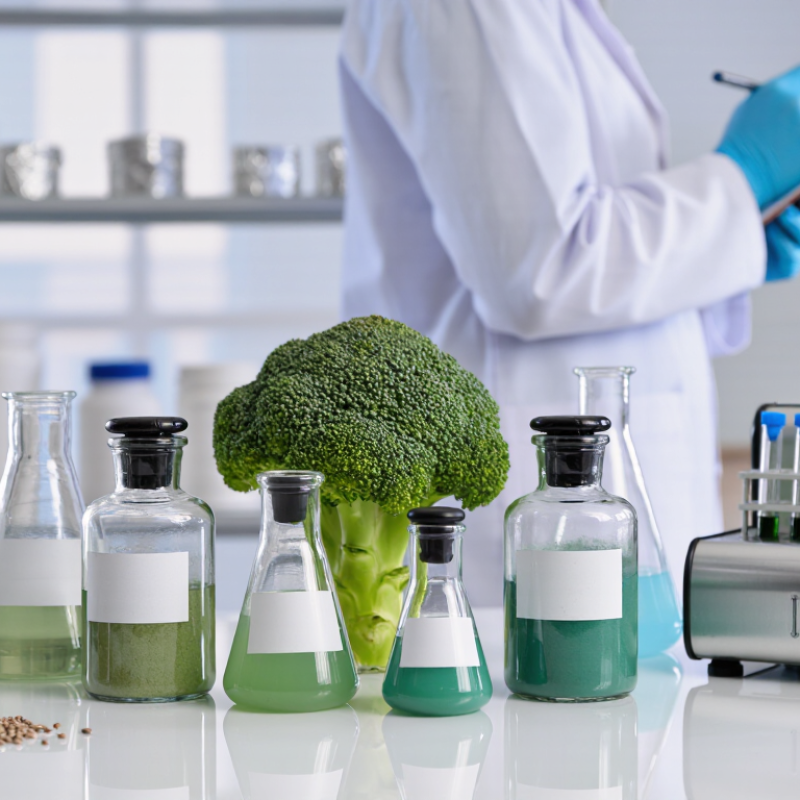
Top Broccoli Seed Extract Sulforaphane Suppliers Worldwide?

What Is Broccoli Seed Extract and Sulforaphane?

Broccoli seed extract is a concentrated botanical ingredient made from young broccoli seeds. It mainly supplies glucoraphanin, a natural precursor to sulforaphane. Sulforaphane appears when myrosinase breaks glucoraphanin apart during crushing, chewing, or digestion. The reaction is simple. The chemistry is not.

Composition can vary sharply between extracts. Seed variety, harvest timing, extraction temperature, and enzyme stability all matter. Some products contain glucoraphanin but little active myrosinase. Therefore, the label should state both compounds when possible. Human research remains promising, yet results differ because absorption and conversion are inconsistent. A 2018 review in Nutrients noted that sulforaphane formation depends strongly on preparation and gut conditions. That limitation deserves more attention.

Tips: Choose a certificate of analysis showing glucoraphanin content and testing methods. Look for stability data, not only a large milligram claim. Grand View Research valued the global dietary supplements market at about $177.5 billion in 2023, with continued growth projected through 2030. That expansion increases ingredient demand, but market size does not prove clinical effectiveness. Independent testing for identity, contaminants, and batch consistency remains essential. I would also question products using “sulforaphane” wording without explaining whether the extract contains sulforaphane itself or only its precursor.

How Sulforaphane Content and Product Quality Are Evaluated

Evaluating broccoli seed extract suppliers starts with a basic question: what is actually being measured? A credible specification distinguishes sulforaphane from glucoraphanin, its precursor. These compounds are not interchangeable. The certificate of analysis should state the test method, assay result, batch number, and sampling date. HPLC may quantify glucoraphanin well, while LC-MS or validated derivative methods can help assess sulforaphane. Method details matter.

Product quality also depends on myrosinase activity, because this enzyme supports the conversion of glucoraphanin into sulforaphane. Processing heat can reduce this activity. Extraction conditions, drying temperature, moisture, and storage time should therefore be documented. I would also check microbial counts, heavy metals, pesticides, residual solvents, and allergen controls. Clean packaging helps, but it does not replace laboratory evidence. A neat label proves little.

For international sourcing, I would request traceability from seed origin to finished batch. Independent laboratory testing adds useful credibility, especially when results include chromatograms and detection limits. Supplier audits can reveal practical details, such as sealed drums, temperature records, and inventory rotation. No test is perfect. A polished document may still omit important weaknesses. Repeated batch testing matters more than one impressive result. The strongest supplier explains expected variation, stability data, and recommended storage without overstating certainty.

Where Leading Global Suppliers Operate

Top Broccoli Seed Extract Sulforaphane Suppliers Worldwide?

Leading broccoli seed extract suppliers operate across several manufacturing and distribution regions. China remains a major production base, supported by large agricultural networks and established botanical extraction facilities. European suppliers often emphasize traceability, controlled processing, and documentation for food and supplement applications. North American companies commonly provide local warehousing, technical support, and contract manufacturing connections.

India is also expanding its botanical ingredient capacity. Its suppliers may source broccoli seeds domestically or through international partners. Australia and New Zealand serve smaller but quality-focused markets, with strong attention to agricultural records and import compliance. Many global suppliers manufacture in one country while storing finished materials near customers in Europe, North America, or Asia.

Location alone does not prove quality. Buyers should request the botanical name, seed origin, extraction method, and batch-specific certificate of analysis. Testing should address sulforaphane content, glucoraphanin levels, moisture, microbes, heavy metals, and residual solvents. A supplier should explain whether myrosinase is naturally retained or added during processing. That detail can affect real-world conversion.

A polished website is not proof. Sometimes, smaller facilities provide clearer answers than larger exporters. Yet their capacity may be less consistent. Samples should be compared across multiple batches, not judged from one attractive test report. Lead times, packaging conditions, temperature control, and customs documents also matter when extracts cross borders. Supplier claims can sound precise, but independent verification remains necessary.

How to Compare Supplier Certifications and Manufacturing Standards

Choosing top broccoli seed extract sulforaphane suppliers requires more than comparing assay percentages. Certification scope matters. A facility should show current ISO 22000 or FSSC 22000 certification, with the certificate covering botanical extraction and finished supplements. The 2023 ISO Survey reported tens of thousands of ISO 22000 certificates worldwide, so certification alone does not prove strong performance. Check the issuing body, audit date, site address, and product category.

Manufacturing evidence should be specific. Ask for batch records, allergen controls, sanitation logs, and validated testing methods. Sulforaphane can degrade through heat, oxygen, and prolonged storage. Reliable suppliers should measure active sulforaphane, precursor content, moisture, heavy metals, pesticides, and microbial limits. High-performance liquid chromatography data is useful, but the method and reference standard should be disclosed. A certificate of analysis without test conditions is incomplete. It happens.

Independent laboratory testing adds credibility. The 2023 FAO and WHO food safety reporting continues to cite approximately 600 million foodborne illnesses and 420,000 deaths annually, showing why preventive controls deserve serious review. Request recent third-party results, not only promotional samples. Also compare traceability exercises, complaint records, and recall procedures. A supplier may hold several certificates yet provide weak documentation. That uncomfortable detail should influence the final decision. Supplier audits, technical interviews, and stability data often reveal more than a polished certificate.

Top Broccoli Seed Extract Sulforaphane Suppliers Worldwide? — How to Compare Supplier Certifications and Manufacturing Standards

Use the typical certificate validity or certification-cycle length as one screening dimension when comparing suppliers. A longer cycle does not indicate higher product quality; always verify audit scope, current status, manufacturing site, testing methods, and sulforaphane specification.

Benchmark data: ISO 9001, ISO 22000, and FSSC 22000 generally use a three-year certification cycle with periodic surveillance audits. BRCGS and IFS Food certificates are generally valid for one year and require regular reassessment. Certification cycle length should be considered alongside GMP compliance, batch testing, traceability, and contaminant controls.

What Buyers Should Verify Before Choosing a Supplier

Choosing a broccoli seed extract supplier requires more than comparing prices. The 2024 Council for Responsible Nutrition Consumer Survey reported that 75% of U.S. adults use dietary supplements. Demand is strong, but quality can vary sharply between batches.

Buyers should verify whether the specification measures sulforaphane itself or only glucoraphanin. These compounds are not interchangeable. Ask for a recent certificate of analysis, complete testing methods, batch number, and laboratory accreditation. Independent laboratories working under ISO/IEC 17025 provide stronger evidence. The report should show potency, residual solvents, heavy metals, pesticides, microbes, and identity testing. FDA’s 21 CFR Part 111 cGMP framework also expects documented manufacturing controls, traceability, and finished-product verification. A polished certificate is not proof by itself. I would contact the testing laboratory when the result seems unusually perfect.

Stability deserves close attention. Sulforaphane can decline through heat, moisture, oxygen, and poor packaging. Request real-time or accelerated stability data, recommended storage conditions, and packaging specifications. Confirm the extract’s botanical identity, harvest location, extraction solvent, carrier materials, and myrosinase activity when conversion is claimed. Review the supplier’s audit history and recall procedure. Tips: Order a pilot lot, compare it with a second batch, and test retained samples independently. Do not accept “high potency” without a defined assay method and numerical result.

Top Broccoli Seed Extract Sulforaphane Suppliers Worldwide? - What Buyers Should Verify Before Choosing a Supplier
Verification Dimension What Buyers Should Check Reliable Evidence or Test Method Why It Matters Priority
Botanical Identity Confirm that the raw material is broccoli seed from Brassica oleracea var. italica, rather than a generic cruciferous seed or vegetable powder. Botanical identification, supplier specification, seed-origin records, and authenticated reference material. Different plant materials can have substantially different glucosinolate profiles and conversion yields. Critical
Active Analyte Definition Determine whether the product is standardized to sulforaphane, glucoraphanin, or total glucosinolates. These are different measurements and should not be presented as equivalent. Product specification clearly stating the analyte, assay units, acceptance range, and calculation basis. Glucoraphanin is a precursor; sulforaphane is the isothiocyanate formed when glucoraphanin is converted by myrosinase. Critical
Sulforaphane Assay Ask whether the finished extract contains measurable sulforaphane and whether the reported value refers to the actual finished material. Recent batch-specific certificate of analysis using a validated chromatographic method such as HPLC or LC-MS, with units and sample preparation disclosed. Some products report precursor content or theoretical yield instead of directly measuring sulforaphane. Critical
Glucoraphanin Assay For precursor-based products, verify the glucoraphanin concentration and the method used to calculate it. HPLC or LC-MS test report identifying glucoraphanin, assay basis, reference standard, and batch number. Glucoraphanin content alone does not prove that a product will deliver a defined amount of sulforaphane after consumption. High
Myrosinase Activity Check whether active myrosinase is naturally retained, added separately, or absent from the formulation. Enzyme activity assay reported in a defined unit, together with storage conditions and stability data. Myrosinase catalyzes the conversion of glucoraphanin to sulforaphane, but its activity can be reduced by processing and storage. Critical
Conversion or Yield Data Request data showing how much sulforaphane is generated from the stated glucoraphanin content under a defined test protocol. In-vitro conversion study specifying pH, temperature, reaction time, enzyme condition, sample preparation, and analytical method. Conversion depends on processing, matrix, enzyme activity, moisture, temperature, and testing conditions. High
Extraction Process Review solvent use, extraction temperature, concentration steps, drying method, and carrier ingredients. Manufacturing flow chart, technical data sheet, allergen statement, and declaration of processing aids. Heat and prolonged processing may affect myrosinase activity and the stability of some isothiocyanates. High
Batch Consistency Compare assay results from multiple commercial batches rather than relying on a single sample. At least three recent batch certificates showing batch number, manufacture date, test date, specification, and actual result. Natural seed materials can vary because of cultivar, growing conditions, harvest timing, and storage. High
Contaminant Control Verify testing for heavy metals, pesticides, microbial contamination, aflatoxins, and other contaminants relevant to the raw material and market. Independent laboratory reports using recognized methods and showing limits of detection or quantification. Seed-derived ingredients may carry agricultural, environmental, or microbiological risks if controls are inadequate. Critical
Microbiological Quality Check total aerobic count, yeast and mold, and absence or limits for relevant pathogens. Batch-specific microbiological certificate aligned with the requirements of the destination market. Powdered botanical extracts require controlled moisture, sanitation, and packaging to limit microbial growth. Critical
GMP and Quality System Confirm that the manufacturing site operates under an appropriate good manufacturing practice system. Current third-party audit certificate, scope of certification, audit date, corrective-action status, and facility address. A valid quality system supports traceability, deviation management, change control, and release testing. High
Traceability Trace the product from finished batch to extraction lot, seed lot, harvest region, and approved raw-material supplier. Lot genealogy records, supplier approval documents, production records, and mock-recall evidence. Traceability allows faster investigation and withdrawal if a quality or safety issue occurs. High
Stability and Shelf Life Review stability data for the stated packaging, storage temperature, humidity, and shelf-life period. Real-time or accelerated stability protocol with results for active compounds, moisture, appearance, and microbiology. Sulforaphane, glucoraphanin, and enzyme activity may change during storage depending on formulation and packaging. High
Packaging and Storage Verify moisture and oxygen protection, container compatibility, tamper evidence, and recommended storage conditions. Packaging specification, barrier data where available, transport instructions, and retained-sample procedure. Light, oxygen, heat, and moisture can contribute to degradation or loss of enzyme activity. High
Regulatory Documentation Confirm that the ingredient can legally be imported, sold, and used for the intended product category in the target market. Regulatory status statement, safety documentation, product specification, SDS where applicable, and market-specific declarations. Botanical ingredient requirements differ by country, intended use, dosage, claims, and product classification. Critical
Claims and Label Accuracy Ensure marketing claims match the tested ingredient form and do not imply unsupported medical treatment or guaranteed biological effects. Label review, claim substantiation file, approved wording, and documented distinction between chemical content and clinical outcomes. Analytical potency does not automatically establish a specific health benefit in humans. High
Minimum Order and Lead Time Compare minimum order quantity, sample availability, production lead time, replenishment capacity, and allocation policy. Written commercial quotation, supply agreement, capacity statement, and historical delivery performance where available. A technically suitable ingredient may still be unsuitable if supply continuity does not match production needs. Standard
Sample-to-Batch Match Confirm that the qualification sample and commercial production material are made under comparable specifications and process controls. Sample certificate, pilot or production batch certificate, retained sample comparison, and change-notification commitment. Differences between sample and production batches can create unexpected potency, color, odor, or solubility variation. High
Independent Verification Test a pre-shipment or received sample through an independent laboratory before final approval. Chain-of-custody record and independent results for identity, active analytes, contaminants, and microbiological quality. Independent testing helps confirm supplier data and reduces the risk of relying only on self-issued documentation. Critical
Buyer note: A supplier should not be ranked solely by a high stated percentage. The most meaningful comparison is based on verified analyte identity, batch-specific testing, myrosinase or conversion evidence, contaminant control, traceability, stability, and regulatory suitability for the intended market.

FAQS

What should a certificate of analysis measure?

It should distinguish sulforaphane from glucoraphanin, its precursor. Include the test method, assay result, batch number, and sampling date. Without these details, the document is incomplete.

Why does myrosinase activity matter?

Myrosinase supports conversion from glucoraphanin to sulforaphane. Heat can reduce this enzyme activity. Ask about extraction, drying temperature, moisture, and storage time. Not always obvious.

Which laboratory methods are useful?

HPLC can measure glucoraphanin effectively. LC-MS or validated derivative methods may assess sulforaphane. Request reference standards, test conditions, and detection limits. A percentage alone says too little.

What quality checks are needed beyond active compounds?

Review microbial counts, heavy metals, pesticides, residual solvents, moisture, and allergen controls. Clean packaging does not replace laboratory evidence. Packaging is only packaging.

How can traceability be verified?

Request records from seed origin through the finished batch. Check batch records, sealed drums, temperature logs, and inventory rotation. A traceability exercise can expose missing links.

How should manufacturing certifications be compared?

Check the certificate scope, issuing body, audit date, site address, and product category. Confirm coverage of botanical extraction and finished supplements. A logo proves little.

Why is independent laboratory testing valuable?

Recent third-party results can support supplier claims. Request chromatograms, detection limits, and actual batch data. Promotional samples may not represent routine production.

Does one impressive test result prove consistent quality?

No. Repeated batch testing is more informative than one strong result. Review stability data because heat, oxygen, and prolonged storage may reduce quality. I would still hesitate after seeing only one excellent report.

Conclusion

Broccoli Seed Extract Sulforaphane is a plant-based ingredient valued for its naturally occurring glucoraphanin, which can be converted into sulforaphane under suitable conditions. This article explains how extract quality is assessed through sulforaphane potency, glucoraphanin levels, conversion efficiency, purity, stability, and consistency between batches. It also outlines the main regions where leading suppliers operate and why manufacturing location, supply-chain transparency, and technical capabilities matter to international buyers.

When comparing suppliers, buyers should review certifications, quality-management systems, testing procedures, production standards, and documentation such as certificates of analysis and contaminant reports. It is also important to verify raw-material traceability, extraction methods, shelf-life data, packaging, minimum order quantities, and communication support. By evaluating these factors systematically, purchasers can identify reliable partners that provide consistent Broccoli Seed Extract Sulforaphane products suitable for their intended applications and market requirements.

Aveline

Aveline

Aveline is a professional marketing specialist with a deep understanding of the company’s products, customer needs, and industry trends. Through a combination of strategic insight, clear communication, and practical market knowledge, Aveline helps present complex product information in an......