 English English
Laboratory-assayed batches conforming to European Pharmacopoeia, EFSA, and EU Organic standards. Delivered with comprehensive CoA, SDS, and batch traceability documentation.
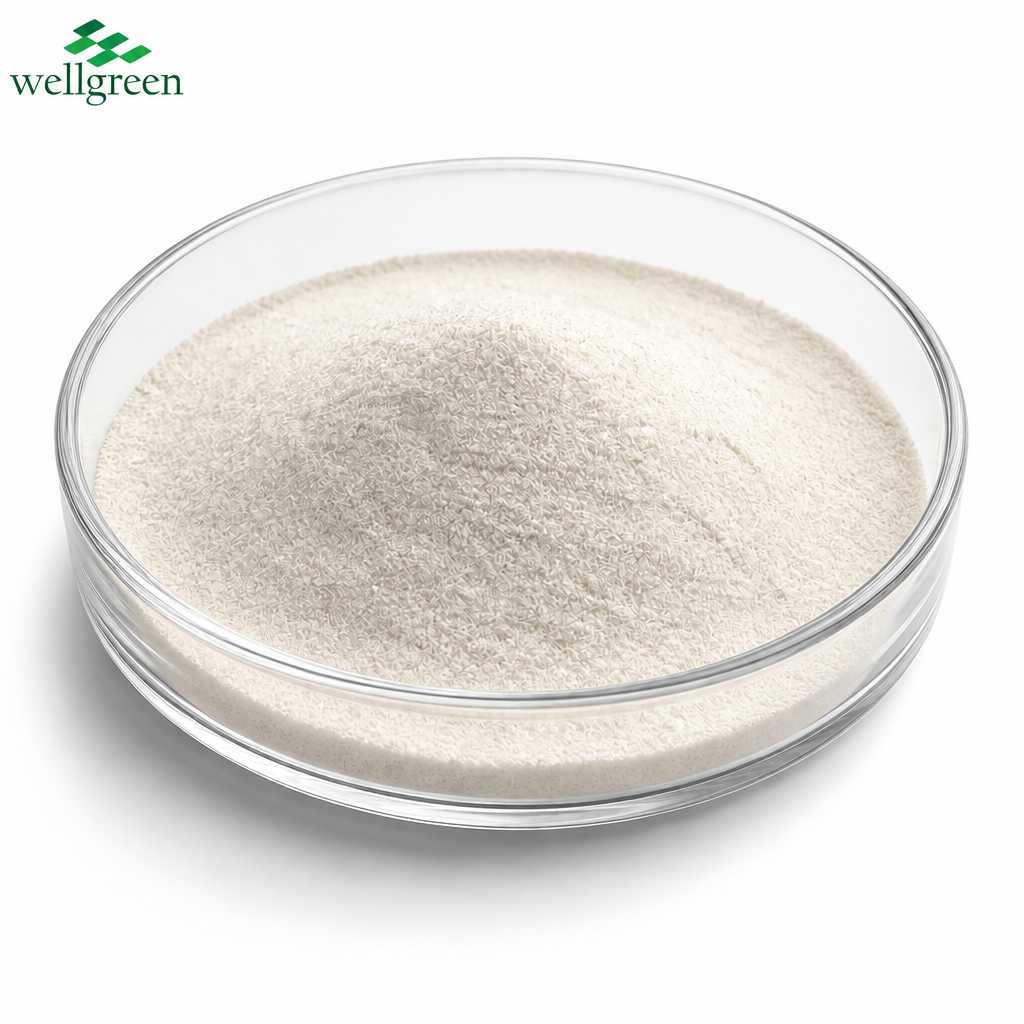
Quillaja Saponaria Molina (commonly designated the soap bark tree) is an indigenous evergreen phanerogam species belonging to the family Quillajaceae. The bioactive potential of the species resides primarily in the inner cambial and bark tissues, which synthesize high concentrations of glycosylated polycyclic triterpenoid saponins. Structurally, Quillaja saponins comprise a hydrophobic aglycone backbone—predominantly quillaic acid, gypsogenin, or phytolaccagenic acid—covalently linked at C-3 and C-28 positions to complex, branched oligosaccharide chains (glucuronic acid, galactose, xylose, apiose, fucose, and rhamnose).
This bidesmosidic architecture confers exceptional surface-active characteristics. Unlike synthetic non-ionic surfactants such as polysorbates (Tween series) or ethoxylated alcohols, natural Quillaja saponin fractions exhibit extreme thermodynamic resilience across broad pH spectrums (pH 2.5 to 8.5), elevated salinity, and intense thermal processing (autoclaving up to 121°C). In the European Union and specifically the Bulgarian industrial market, Quillaja extract is designated under food additive code E 999, regulated strictly by Regulation (EC) No 1333/2008 and supervised nationally by the Bulgarian Food Safety Agency (BFSA / БАБХ).
| Analytical Parameter | Quillaja Liquid Grade (QL-20) | Quillaja Purified Powder (QP-65) | Pharmaceutical Fraction (QS-21 Clean) | Validation Protocol |
|---|---|---|---|---|
| Total Saponin Content | 18.0% - 22.0% (w/w) | 60.0% - 68.0% (w/w) | ≥ 98.0% Purified Active | HPLC / Reverse Phase UV 214nm |
| Physical State | Dark brown viscous liquid | Light amber free-flowing powder | White lyophilized crystalline | Visual & Rheometry |
| Total Dissolved Solids (Brix) | 48.0 - 52.0 °Bx | Not Applicable (≤ 5.0% Moisture) | ≤ 2.0% Residual Moisture | Digital Refractometer / LOD Oven |
| pH Value (10% Aq. Solution) | 3.8 - 4.6 | 4.2 - 5.5 | 5.5 - 6.5 | Potentiometric Electrode |
| Heavy Metals (Pb, As, Cd, Hg) | < 5.0 ppm Total | < 3.0 ppm Total | < 1.0 ppm Total (Ph. Eur.) | ICP-MS Inductively Coupled Plasma |
| Microbiological Profile | TPC <1,000 CFU/g | Pathogens Neg. | TPC <500 CFU/g | Molds <50 CFU/g | Sterile, Pyrogen-Free (<0.05 EU/mg) | USP 61/62 Membrane Filtration |
Bulgaria’s strategic geographic position bridging Southeastern Europe and the wider Western and Central European trade routes makes it an expanding processing hub. Rising domestic and export demand across beverage manufacturing in Sofia and Plovdiv, agro-industrial cereal production across the Dobrudzha and Thracian plains, and rose-valley cosmetic manufacturing creates substantial requirements for premium-grade botanical saponin extracts.
Widely utilized by Bulgarian beverage producers for non-alcoholic malt beverages, cider, carbonated sodas, and cordials. QL-20 and QP-65 serve as resilient, long-lasting micro-foam stabilization systems that create creamy, stable head retention without altering the organoleptic profile. Complies fully with EC Regulation 1333/2008 Annex II limits for category 14.1.4.
In Bulgaria's intensive viticulture, orchard, and grain operations (Dobrich, Ruse, Stara Zagora), Quillaja saponins function as natural bionematicides and biodegradable spreading agents. Their amphiphilic structure breaks down the cuticular membrane of root-knot nematodes (Meloidogyne spp.) while optimizing foliar spray adhesion to waxy leaf surfaces, reducing runoff.
Integrated by personal care formulators in Sofia and the Rose Valley (Kazanlak) as an alternative to sodium lauryl sulfate (SLS/SLES) and synthetic betaines. Offers exceptionally low ocular and dermal irritancy scores, producing ultra-fine micro-foam in organic facial cleansers, anti-dandruff scalp tonics, and intimate hygiene products meeting COSMOS Natural certification.
Bulgarian poultry and swine producers utilize Quillaja triterpenes to modulate intestinal microflora, mitigate hazardous manure ammonia emissions, and control enteric protozoa (e.g., Eimeria tenella). Synergized often with Yucca schidigera extracts to enhance tight junction integrity in broiler enterocytes under European FAMI-QS verified traceability.
QS-21 is an acylated triterpene saponin fraction purified via preparative reverse-phase chromatography. Regarded as an essential immunostimulatory component in advanced ISCOMATRIX vaccines, veterinary immunotherapeutics, and human vaccine formulations that elicit robust cytotoxic T-lymphocyte (CD8+) and balanced Th1/Th2 responses.
The procurement landscape for natural phyto-additives across the European Union is undergoing structural realignments propelled by the EU Green Deal, the "Farm to Fork" Strategy, and stringent updates to EC Regulation 1907/2006 (REACH) targeting synthetic petrochemical surfactants. In Bulgaria, industrial procurers and quality assurance directors are navigating these transitions through several strategic shifts:
1. Clean-Label Phase-Out of Synthetic Emulsifiers: The consumption of beverages and packaged functional foods containing polysorbates, sorbitan esters, and synthetic polyglycerol polyricinoleate (PGPR) is dropping sharply across Southeastern Europe. Retail brands audited by major European chains (such as Kaufland, Lidl, and Billa operating in Bulgaria) face consumer scrutiny over synthetic emulsifiers linked to gut mucosal dysbiosis. Quillaja extract provides a single, 100% natural ingredient that preserves clean-label claims ("Natural Botanical Saponin Extract" or "E 999").
2. Bio-Based Agricultural Modernization: The European ban on numerous synthetic organophosphate and carbamate pesticides has created a protection void for Bulgarian cereal grain growers in Dobrudzha and fruit producers in Plovdiv. Water-soluble Quillaja saponins serve as an indispensable tool under Integrated Pest Management (IPM) protocols. The extract delivers potent ovicidal and larvicidal efficacy against subterranean nematodes without leaving persistent chemical residues in the soil or groundwater tables.
3. Precision Analytical Control Requirements: Bulgarian customs entry points (Port of Varna, Port of Burgas, and Sofia Airport Customs Bureau) mandate verifiable certificates of analysis for non-EU botanical imports. BKYULA Biotech resolves clearance bottlenecks by deploying validated testing methodologies (HPLC identification of quillaic acid marker peaks, heavy metal ICP-MS screening, ethylene oxide residual testing, and PAH4 polycyclic aromatic hydrocarbons analysis) executed strictly according to ISO/IEC 17025 accredited procedures.
Headquartered in China's botanical extraction heartland of Xi'an, Shaanxi, BKYULA Biotech Co., Ltd. is a specialized, vertically integrated bio-refining enterprise operating nearly 15 years of industrial research, extraction, concentration, and crystallization. Supplying clients throughout North America, Western Europe, and Eastern European gateways including Bulgaria, our infrastructure is built to guarantee batch-to-batch repeatability and institutional compliance.
Our extraction campus, production workshops, and warehouse staging terminals have undergone exhaustive onsite evaluation by SGS Group. Certified according to ISO 9001:2015 Quality Management, ISO 22000:2018 Food Safety Systems, HACCP, FAMI-QS for specialized animal feed additives, alongside institutional HALAL and KOSHER accreditations.
Every commercial production run is validated against high-purity reference standards. Our analytical testing laboratory operates dual Shimadzu High-Performance Liquid Chromatography (HPLC) towers, UV-Vis Spectrophotometers, Gas Chromatography-Mass Spectrometry (GC-MS) for solvent residues, and an independent clean-bench microbiological incubation suite.
Flexible procurement scale: standard botanical extracts available from 1 kg pilot batches to 20-ton full-container sea shipments. Supporting multi-modal logistics to Bulgaria: Air freight direct to Sofia (SOF) with 4-6 business day lead times, or ocean container freight to Port of Varna / Port of Burgas, handled seamlessly under FOB, CIF, or Delivered Duty Paid (DDP) terms.
Key technical, regulatory, and logistics answers for purchasing agents, regulatory compliance managers, and R&D scientists in Bulgaria.